


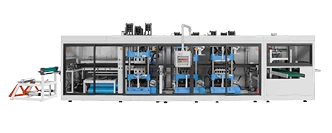


Against the backdrop of the global energy crisis and carbon neutrality goals, the plastics industry is under unprecedented pressure to reduce energy consumption and carbon emissions. plastic cups, as products that consume a massive deal of money in daily life, are particularly vulnerable to energy consumption and carbon emissions during production. According to the latest technology development trend of plastic cup production line and practical cases of the industry, the paper systematically explores the energy-saving and energy-saving path of plastic cup production line to provide an operational solution for the green transformation of the industry.
1.Core Process Optimization: Reduce energy consumption at source.
1.1 Precision Control of Injection Molding Parameters
Injection molding is the core process of plastic cup production, accounting for over 60%% of the energy consumption of the entire production line. By optimizing the pressure and time parameters, remarkable energy saving can be achieved while ensuring the quality of products. For example, the use of multi-stage pressure retention combined with intelligent pressure control systems can reduce energy consumption by 20 to 30 per cent. Case study shows that when the pressure is reduced from 120 MPa to 90 MPa and the energy consumption per mode is reduced from 0.18 kW·h to 0.13 kW·h, the product qualification rate increases by 5 per cent.
Cooling system optimization is another important breakthrough. Traditional air cooling systems use more energy, but switching to water cooling systems with closed-loop cooling towers can reduce cooling energy consumption by over 40%. In one line renovation case, the cooling time was reduced by 35 35% optimizing mold water channel layouts and using nanofluid cooling media, and the mold cycle was reduced from 18 seconds to 12 seconds, saving 120,000 kW · h of electricity per year.
1.2 Increasing Extrusion Processes Efficiency
For production modes of cup body and lid manufactured separately, the energy saving potential in the extrusion process is great. Adopting variable pitch screw instead of conventional constant pitch screw can improve plasticization efficiency by 15%-20%. One enterprise has optimized the temperature distribution across heating zones to avoid local overheating and energy waste, and combined with intelligent temperature control systems for dynamic power adjustment, energy consumption per unit of product has been reduced from 0.32 kW·h/kg to 0.25 kW·h/kg.
2.Equipment Upgrades and intelligent transformation
2.1 Introduction of efficient power systems
The energy conversion efficiency of traditional hydraulic injection molding machines only 60%-70%, while that of all-electric injection molding machines driven directly by servo motors can reach 90%. One enterprise replaced all 12 hydraulic presses with purelyelectric models, reducing annual electricity consumption from 4.8 million kW·h to 2.8 million kW·h, a 42% efficiency rate. In the case of hydraulic system, the combination of frequency conversion speed regulation and low pressure hydraulic oil can reduce the system energy consumption of hydraulic system by 25%-30%.
2.2 Integration of Intelligent Control Systems
Production parameters can be optimized in real time by deploying Distributed Control Systems systems (DCS) and Manufacturing Execution Systems (MES). After the introduction of artificial intelligence algorithm, a production line automatically adjusted parameters such as injection speed and insulation time according to raw material performance, ambient temperature and so on, reducing the variation of energy consumption per unit product from ±8% to ±2%. Combined with predictive maintenance systems, equipment failure rates were reduced by 40% and unplanned downtime was reduced by 60%.
2.3 Build waste heat recovery systems
Plastic cup production produces a lot of Substantial waste heat, extruder barrel heat dissipation and hydraulic heating produce 30% of total low-grade heat energy. The heat can be used for raw material preheating or workshop heating heating by installing heat pipe waste heat recovery device. One enterprise's practice showed that the consumption of natural gas decreases by 25% and 120 tons of standard coal are saved annually after the residual heat recovery system is put into operation.
3. Energy Structure Optimization and Renewable Energy Utilization
3.1 Clean Energy Alternative Solutions
The installation of a photovoltaic (PV) system on the roof of the plant, combined with an "auto-generation, surplus electricity into the grid" model, can meet 30%-40% of the production line's electricity demand. One enterprise's 5 MW photovoltaic power station generates 6 million kilowatt hours of electricity per year, equivalent to 4,800 tons of carbon dioxide emissions. The waste plastic pyrolysis syngas can be used as biomass energy source for boiler fuel and so on to realize energy recycling.
3.2 Power Quality Optimization Measures
The installation Active Power Filters (APF) and Dynamic Voltage Restorers (DVR) can eliminate voltage fluctuations and harmonic interference and improve the efficiency of equipment operation. As a result of the revamp, the electrical power factor one production line was increased from 0.78 to 0.95 and the transformer load rate was reduced by 18%, saving 150,000 kW·h of electricity per year.
4. Raw Material Substitution and Lightweight Design
4.1 Application of Biobased Materials
Traditional polyethylene (PE) and polypropylene (PP) production processes have higher carbon emissions, while biodegradable plastics such as polylactic acid (PLA) have a 40% lower carbon emission intensity. One enterprise has developed PLA/bamboo fiber composites that reduced the weight of a single cup from 8 grams to 6 grams while maintaining cup strength, reducing raw material consumption by 25% and production energy consumption by 18%.
4.2 Structural Optimization Design
By using CAE simulation technology, the cup wall thickness distribution is optimized, and the thinning of the material is achieved under the condition of guaranteeing mechanical properties. Through topological optimization design, one enterprise reduced the thickness of the bottom of the cup from 1.2 mm to 0.9 mm, reducing the amount of raw material used per cup by 20% and the injection molding cycle by 15%. Combined with multi-layer co-extrusion technology, the air insulation layer can be formed in the cup wall, which can improve the insulation performance by 30% and reduce the usage of materials.
V. Waste Recovery and Resource Utilization
5.1 Edge Material recycling System
Set up the integrated recycling line of crusher-cleaning-granulation-modification to convert injection molding side material into regenerated particles. By adding 20 to 30 per cent recycled material, raw material costs can be reduced by 15 to 20 per cent without compromising product quality. One enterprise's practice showed that cups made from recycled materials maintained 92% tensile strength and 88 percent impact strength compared to cups made from raw materials.
Energy-Saving Technologies for Exhaust Gas
Volatile organic compounds (VOC) treatment during injection molding is the focus of energy conservation. By using zeolite rotor concentration + catalytic combustion technology, the low-concentration exhaust gas can be concentrated 20 times before treatment, and the thermal recovery efficiency can be more than 85%. After the revamp, one enterprise reduced its gas consumption by 60%, and the catalyst replacement cycle was extended to 2 years, saving 400,000 yuan a year in operating costs.
6. Green Supply Chain Collaborative Management
6.1 Low-Carbonization of Upstream Raw Materials
Demand carbon footprint data from suppliers and prioritise sourcing raw materials produced using green electricity. One enterprise has set up a supplier carbon footprint evaluation system to reduce the emission intensity of raw materials by 12% and logistics energy consumption by 15% through centralized procurement.
6.2 Downstream Logistics Optimization
New energy transportation vehicle and route optimization algorithm are used to reduce distribution energy consumption. 1 by replacing diesel trucks with electric vans through a intelligent dispatching systems, reducing transportation carbon emissions by 70 percent and reducing vehicle vacancy from 25 percent to 10 percent.
7. Implementation Pathways and Benefit Evaluation
7.1 Phased Transformation Strategy
In accordance with the principle of ``urgent need and benefiting the people '', enterprises should be guided to implement the system in stages: in the first year, they should complete equipment energy-saving and waste heat recovery system, with an expected payback period of 2-3 years; in the second year, they should promote clean energy substitution and intelligent upgrading, with a reduction energy consumption intensity intensity by more than 20%; and in the third year, they should establish a green supply chain system to achieve the goal of reducing carbon emissions throughout their life cycle.
7.2 Integrated Benefits Analysis
For enterprises producing 100 million plastic cups a year, the comprehensive implementation of these measures will save 8 million kW·h electricity, 6,400 tons of carbon dioxide emissions, 3 million yuan in raw material costs and 3 million yuan in waste disposal costs per year. While initial investment will be about $20 million, revenue from energy conservation and carbon trading revenues can be recovered in 4 to5 years.
Conclusion:
To reduce energy consumption of plastic cup production line, a systematic approach should be adopted from the aspects of process optimization, equipment upgrades, energy management, raw material substitution and waste recycling. By introducing innovative solutions such as intelligent control technology, clean energy alternatives, and lightweight design, enterprises can significantly reduce operating costs, improve market competitiveness, and set a benchmark for the industry's green transformation. In the context of the goal of carbon neutrality goals, energy conservation has become the only way for the plastics industry to survive and grow, and continuous innovation is key to winning the market of the future.


