


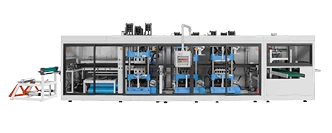


Thermoforming Machine
Introduction
As demand for disposable food packaging continues to grow, manufacturers are under increasing pressure to deliver higher output, maintain consistent quality, and control production costs. The global food packaging market has seen steady expansion, driven by changing consumer lifestyles, the growth of takeaway and delivery services, and rising demand for convenient, hygienic packaging solutions. Traditional production methods often struggle to keep up with these market requirements, making efficiency a key factor in maintaining competitiveness. Modern thermoforming machines provide automated, high-speed, and cost-effective solutions that help manufacturers improve productivity and meet the evolving needs of the food packaging industry.
Why Production Efficiency Matters in Disposable Food Packaging Manufacturing
Production efficiency directly affects profitability, product quality, and the ability to respond to changing market demands. Rising labor costs, increasing competition, and stricter quality requirements have made efficient manufacturing more important than ever. High-output production lines not only reduce unit costs but also help manufacturers ensure stable product quality, minimize waste, and improve delivery performance. Traditional manual or semi-automated production methods often face limitations such as inconsistent output quality, high labor dependence, and extended downtime during product changeovers, which can lead to higher production costs, delayed order fulfillment, and reduced competitiveness in price-sensitive markets. As a result, investing in efficient equipment has become essential for long-term growth in the disposable food packaging industry.
How Do Thermoforming Machines Improve Production Efficiency?
Thermoforming machines enhance production efficiency through several key mechanisms that work in
concert to maximize output while minimizing waste and downtime.

Multi-Station Automation and High-Speed Production

Precise Temperature Control and Consistent Product Quality

Fast Mold Changeover and Flexible Production

Efficient Material Utilization and Waste Reduction
Key Factors to Consider When Choosing a Thermoforming Machine
Selecting the right thermoforming machine is essential for achieving long-term productivity and maximizing return on investment. Several factors should be evaluated before making a purchase decision.
- Production Speed and Output Requirements - Choose a machine that matches your expected production capacity and future expansion plans.
- Material Compatibility - Ensure the machine can process the materials used in your products, such as PP, PET, PLA, or other food-grade sheets.
- Automation Level and Labor Savings - Higher automation can improve efficiency, reduce labor dependence, and increase production stability.
- Mold Change Flexibility - Fast mold replacement and versatile tooling help manufacturers switch between different products with minimal downtime.
- Energy Efficiency and Operating Costs - Energy-saving designs and optimized production processes contribute to lower long-term operating expenses.
- Technical Support and After-Sales Service - Reliable support, spare parts availability, and professional service are essential for maintaining continuous production.
LITAI: Your Reliable Thermoforming Machine Manufacturer
LITAI specializes in manufacturing advanced thermoforming machines for disposable food packaging applications. With extensive industry experience, innovative technology, and comprehensive production solutions, LITAI provides equipment designed for high-speed operation, stable performance, and efficient material utilization. Supporting various packaging materials and product types, LITAI offers customized solutions, mold development assistance, and professional after-sales service to help customers improve productivity and achieve sustainable business growth.
Conclusion
Production efficiency plays a critical role in the success of disposable food packaging manufacturers. By integrating automated processes, ensuring consistent quality, reducing material waste, and supporting flexible production, thermoforming machines provide an effective solution for increasing productivity and lowering costs. Choosing the right equipment and working with an experienced manufacturer are essential for maximizing long-term value. Looking for high-performance thermoforming machines for disposable food packaging production? Contact us today to discuss your requirements and discover customized solutions designed for efficient and reliable manufacturing.


