




Introduction
Material waste is one of the most significant cost drivers in thermoforming production, directly impacting both profitability and sustainability. The scrap material left after forming can account for a substantial percentage of total material usage, increasing raw material costs and disposal expenses. Fortunately, through a combination of smart machine design, process optimization, and material selection, manufacturers can dramatically reduce waste while maintaining high production efficiency. This article explores the primary causes of material waste in thermoforming and how advanced equipment and strategies can help minimize it, enabling manufacturers to achieve both economic and environmental benefits.

What Causes Material Waste in Thermoforming Production?
Material waste in thermoforming production can result from a combination of design, material, and process-related factors.
- Inconsistent Sheet Thickness – Variations in sheet thickness can lead to uneven material distribution during forming, increasing the risk of defects and rejected products.
- Poor Mold Design – Inefficient thermoforming mold structures may require larger trimming areas or create uneven stretching, resulting in unnecessary material loss.
- Excessive Trim Scrap – Improper product layout and spacing can generate large amounts of edge waste that cannot be incorporated into the finished product.
- Unstable Process Parameters – Inaccurate heating temperatures, forming pressure, or cycle settings can produce inconsistent parts and increase scrap rates.
- Material Mismatch – Selecting materials that are not well-suited to the product design or forming process can lead to production inefficiencies and higher waste levels.

Key Strategies for Reducing Material Waste
Reducing material waste requires a combination of optimized design, stable process control, efficient
material usage, and strategic production planning throughout the thermoforming process.

Optimize Product and Mold Design

Improve Process Control and Temperature Management

Reduce Trim Scrap Through Better Layout Planning

Select Materials That Match Production Requirements
How Advanced Thermoforming Equipment Improves Material Utilization
Modern thermoforming equipment can play a significant role in reducing waste
by improving process accuracy and production consistency.
Precise Heating Control
Advanced heating systems help maintain uniform temperature distribution across the sheet, ensuring consistent material behavior during forming. This reduces defects caused by uneven heating and minimizes unnecessary scrap.
Consistent Forming Performance
Stable forming systems deliver repeatable production results by maintaining consistent pressure, timing, and forming conditions. Improved process consistency helps reduce rejected parts and supports higher material utilization rates.
Automated Process Optimization
Modern control systems can automatically monitor and adjust production parameters to maintain optimal operating conditions. This reduces human error, improves efficiency, and helps minimize waste throughout the production cycle.
Why Choose LITAI for Efficient Thermoforming Production?
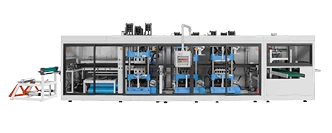
LITAI specializes in thermoforming machinery and automated production solutions designed to help manufacturers improve efficiency and reduce material waste. With extensive industry experience and a comprehensive range of thermoforming equipment, the company supports various packaging applications with solutions focused on precision, stability, and productivity. By combining advanced heating technology, reliable forming performance, and intelligent control systems, LITAI helps manufacturers maximize material utilization, improve product consistency, and achieve lower production costs.
Conclusion
Reducing material waste in thermoforming production requires a combination of optimized product design, effective process control, strategic material selection, and efficient production planning. While these improvements can significantly enhance material utilization, advanced thermoforming equipment further supports waste reduction by delivering greater accuracy, consistency, and process stability. By implementing the right strategies and technologies, manufacturers can lower production costs, improve sustainability, and increase overall operational efficiency. Contact us today to learn how LITAI's thermoforming solutions can help reduce material waste, improve material utilization, and enhance production performance.


