




Introduction
Thermoformed packaging is widely used in industries such as food, healthcare, consumer goods, and retail due to its flexibility, efficiency, and ability to create customized packaging solutions. During the thermoforming process, selecting the appropriate plastic material is an important step that affects packaging appearance, performance, and manufacturing results. Common materials such as PP, PET, and PS each have different characteristics, making it essential for manufacturers to understand their differences before choosing the most suitable option for specific applications. By evaluating material properties and production requirements, businesses can develop more reliable packaging solutions and achieve consistent manufacturing outcomes.

Why Choosing the Right Material Matters in Thermoformed Packaging Production
The choice of thermoforming material directly influences both the final packaging quality and the efficiency of the production process. Different materials vary in properties such as heat resistance, impact strength, transparency, flexibility, and barrier performance, which determine their suitability for different packaging applications. These material characteristics also affect thermoforming conditions, including heating requirements, forming stability, and production consistency. By selecting a material that matches product requirements and manufacturing conditions, manufacturers can reduce processing challenges, improve packaging performance, and achieve more efficient long-term production.
PP vs PET vs PS: Key Differences for Thermoformed Packaging
Different thermoforming materials provide different advantages depending on packaging
requirements, performance expectations, and production needs.
|
Parameter |
PET |
PP |
PS |
|
Images |
PET |
PP |
PS |
|
Transparency |
Excellent – high clarity, ideal for product display |
Moderate – naturally translucent appearance |
Good for GPPS, while HIPS provides lower transparency |
|
Heat Resistance |
Moderate – suitable for standard packaging applications |
High – excellent heat resistance and suitable for hot-fill or microwave applications |
Low to moderate – limited heat resistance compared with PP |
|
Impact Resistance |
High – strong and durable |
Excellent – flexible and resistant to cracking |
Moderate – more rigid but less impact resistant |
|
Barrier Performance |
Good – suitable for applications requiring product protection |
Good moisture resistance and stable performance |
Lower barrier performance compared with PET and PP |
|
Recyclability |
Widely accepted recycling option |
Increasingly recyclable with growing market acceptance |
More limited recycling availability |
|
Cost Level |
Medium |
Low to medium |
Low |
|
Common Applications |
Clamshell packaging, transparent containers, display packaging |
Food containers, microwave packaging, reusable packaging |
Disposable trays, containers, protective packaging |


How to Choose the Right Material for Thermoformed Packaging Production
Choosing the right material requires evaluating how different options perform in real packaging applications and production environments.
The application scenario is the first factor manufacturers should evaluate when choosing a thermoforming material. Different packaging products require different material characteristics. For example, food containers designed for hot food or microwave use often require higher heat resistance, making PP a suitable option. Transparent retail packaging, such as clamshells or display containers, may prioritize appearance and product visibility, where PET provides excellent clarity. For cost-sensitive disposable packaging applications, PS can be considered due to its easy forming characteristics and lower material cost.
The required performance of the final package should determine which material properties are most important. Manufacturers should evaluate factors such as heat resistance, impact strength, transparency, and barrier performance based on the product requirements. For example, packaging used for moisture-sensitive products may require better barrier properties, while packaging used in transportation or retail environments may need higher impact resistance to reduce cracking or damage during handling.
Different materials require different processing conditions during thermoforming, which can affect production stability and final product quality. Factors such as heating temperature, forming behavior, cooling requirements, and material thickness can influence how smoothly a material performs during manufacturing. Choosing a material that matches the capabilities of the thermoforming process helps reduce production issues, maintain consistent forming results, and improve overall manufacturing efficiency.
Material cost is an important consideration, but it should be evaluated together with production efficiency and long-term manufacturing performance. Lower-cost materials may not always provide the best overall value if they result in higher waste rates, unstable forming quality, or additional processing challenges. Manufacturers should consider factors such as material availability, thermoforming requirements, production speed, and consistency to select a material that achieves the best balance between cost efficiency and packaging quality.
As packaging requirements continue to evolve, manufacturers should also consider future market trends and sustainability expectations when selecting materials. Factors such as recyclability, material availability, and customer preferences can influence long-term packaging strategies. Choosing materials that align with both current production needs and future market requirements can help businesses maintain competitiveness and adapt to changing packaging demands.
Conclusion
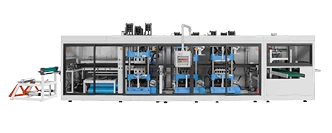
PP, PET, and PS each provide unique advantages for thermoformed packaging production, and the ideal material choice depends on application requirements, performance expectations, and manufacturing goals. Understanding these differences helps manufacturers achieve the right balance of functionality, appearance, efficiency, and cost. Meanwhile, selecting thermoforming equipment with reliable performance and broad material compatibility is essential for maintaining stable production. LITAI offers 3-station and 4-station thermoforming machine solutions capable of processing various materials, including PP, PET, and PS, helping manufacturers improve production flexibility and efficiency. Contact us today to find the right thermoforming solution for your packaging needs.


