




Introduction
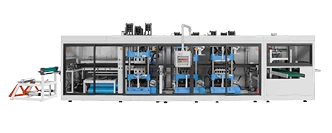
PP thermoforming is widely used for disposable cups and containers, particularly where lightweight construction, consistent shapes, and efficient production are required. The process can accommodate different cup and container designs while supporting high-volume manufacturing. Understanding the characteristics of PP thermoforming and the factors that influence the finished products can help buyers better evaluate suitable production solutions.

Why Is PP Thermoforming Suitable for Disposable Cups and Containers?
PP thermoforming combines the material properties of PP with an efficient forming process, making it suitable for a wide range of disposable packaging applications. Lightweight construction helps reduce material use while keeping cups and containers practical for handling and transportation. PP also offers good heat and chemical resistance, which can be useful for food and beverage packaging exposed to warm contents or different substances. From a processing perspective, thermoforming can produce products in different shapes, sizes, and wall thicknesses while supporting high-volume, repeatable production, making it well suited to large-scale disposable cup and container manufacturing.
How Does the Thermoforming Process Affect PP Cup and Container Quality?
The thermoforming process directly influences the consistency and appearance of finished PP cups and containers. Each stage contributes to the final product quality, from preparing the sheet to handling the formed products.
- Sheet Feeding - Stable and consistent sheet feeding helps maintain a continuous production cycle and provides the material positioning required for accurate forming.
- Heating - Uniform heating allows the PP sheet to reach the appropriate forming condition, helping maintain more consistent material distribution and reduce variations in wall thickness.
- Forming - Controlled forming determines the final shape, dimensions, and depth of the cup or container. Consistent forming conditions help reduce deformation and dimensional variations between products.
- Cutting - Accurate cutting helps maintain consistent product dimensions and clean edges, which is particularly important for disposable cups and containers that require uniform appearance and easy stacking.
- Stacking - Consistent stacking keeps finished products properly aligned and organized, supporting efficient handling, counting, and downstream packaging after thermoforming.
What Should Buyers Consider When Choosing a PP Thermoforming Machine?
The right thermoforming machine should match the product requirements and production plan. Buyers should evaluate the following factors to ensure the equipment can support stable and efficient PP cup and container production.
- Production Capacity and Forming Speed
- Forming Area and Product Dimensions
- Heating System and Temperature Control
- Servo-Driven Feeding and Forming
- Mold Compatibility and Changeover
-
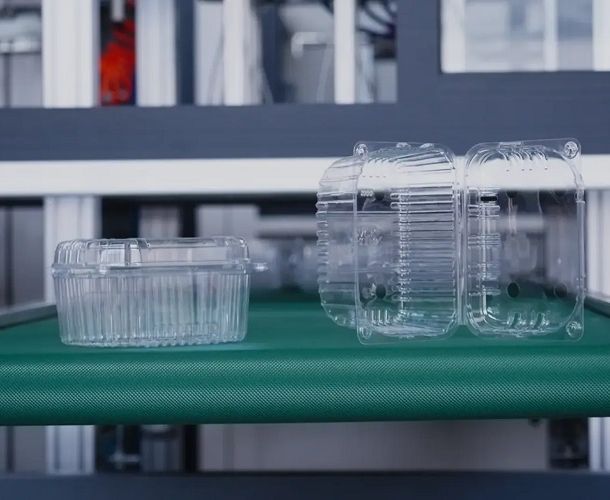 Production Capacity and Forming Speed
Consider the required output, cycle time, and number of cavities when evaluating machine capacity. Instead of focusing only on maximum speed, buyers should estimate the actual output per cycle and ensure it meets current production needs.
-
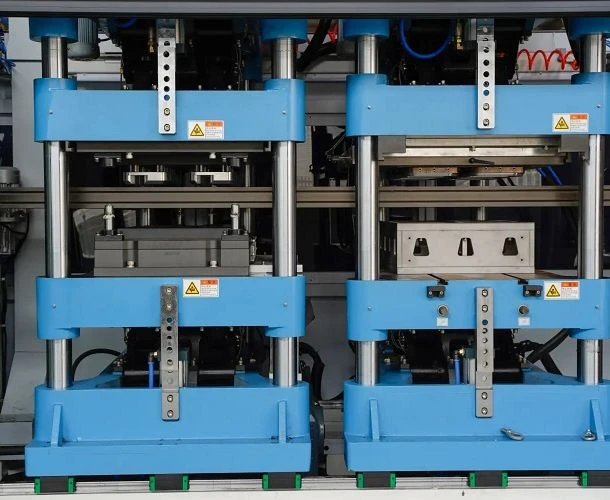 Forming Area and Product Dimensions
The forming area, sheet width, and maximum forming depth should correspond to the size and layout of the target products. The available forming area also affects how many cavities can be arranged in one cycle and therefore influences overall production efficiency.
-
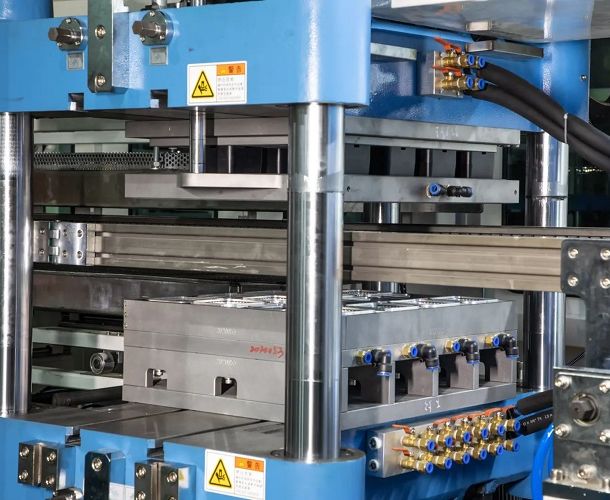 Heating System and Temperature Control
PP sheets require consistent heating before forming, making the heating system and temperature control important for stable production. Buyers should consider heating uniformity and temperature accuracy according to the sheet thickness, product design, and forming requirements.
-
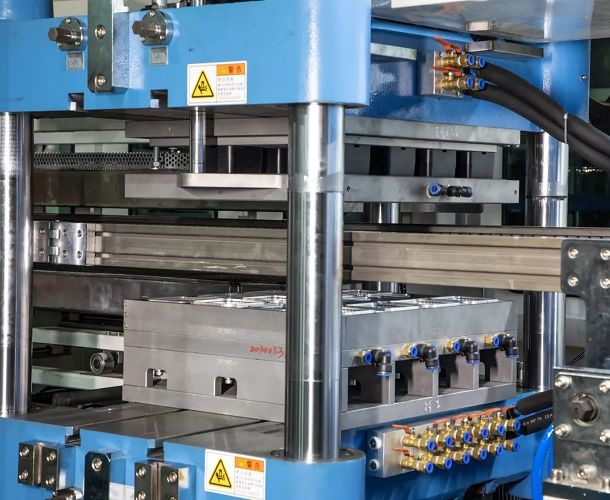 Servo-Driven Feeding and Forming
Servo-driven feeding and forming systems can provide more precise control over sheet movement and forming actions. This can help maintain repeatable production cycles and consistent product dimensions, particularly in automated high-volume production.
-
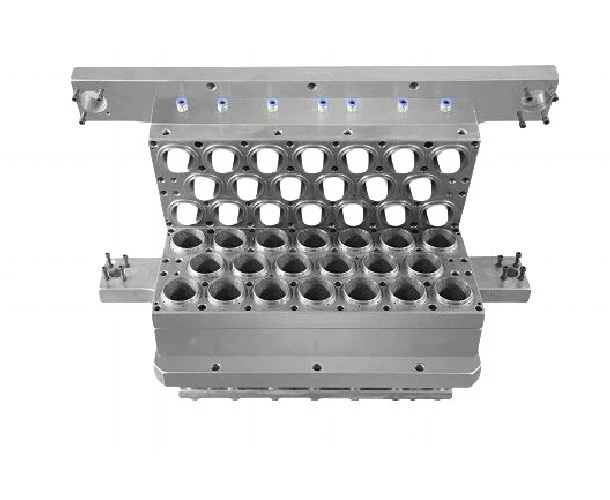 Mold Compatibility and Changeover
The machine should accommodate the required mold dimensions, cavity configuration, and product designs. For manufacturers producing different cups or containers, a practical mold changeover system can reduce downtime and make switching between products more efficient.
What Production Features Can Improve PP Thermoforming Efficiency?
Once the basic machine configuration is established, certain production features can further improve output, material utilization, and workflow efficiency in PP cup and container manufacturing.
- Automated Production Flow - Integrating feeding, heating, forming, cutting, and stacking into a continuous process can reduce manual handling and support more consistent production cycles.
- Material Utilization - Efficient sheet feeding and waste collection can help reduce material loss. This is particularly important for high-volume disposable packaging, where small reductions in scrap can have a meaningful impact on overall material costs.
- Quick Mold Change - A practical mold change system can shorten downtime when switching between different cup or container designs, helping manufacturers maintain higher equipment utilization.
- Automated Stacking - Automatic stacking keeps finished cups and containers organized after forming and cutting, making subsequent counting, packing, and handling more efficient.
- Downstream Integration - Connecting the thermoforming machine with downstream counting, packaging, or other handling equipment can reduce additional manual operations and create a more continuous production workflow.
Conclusion
PP thermoforming provides a practical solution for producing lightweight and consistent disposable cups and containers at high volumes. Its suitability depends not only on the properties of PP, but also on how well the thermoforming process, machine configuration, and production features work together to meet the intended application. For buyers, considering product requirements, forming quality, equipment capabilities, and production efficiency can help create a more suitable and reliable manufacturing setup. LITAI provides thermoforming equipment designed for different plastic packaging applications. Contact us to discuss your PP cup and container production requirements.


