




Introduction
Selecting the right plastic thermoforming machine is a critical decision for manufacturers looking to improve production efficiency, product quality, and long-term profitability. With various machine configurations, forming technologies, and automation levels available, choosing the most suitable equipment requires more than simply comparing specifications. Understanding your production requirements and the capabilities of different thermoforming machines helps ensure reliable performance, lower operating costs, and greater flexibility as your business grows.

Understanding the Basics of Plastic Thermoforming Machines
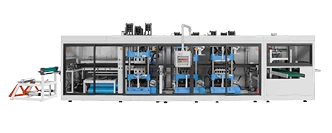
Plastic thermoforming machines are designed to manufacture plastic products by heating thermoplastic sheets until they become flexible and then forming them into the desired shape using specialized molds. After forming, the products are cooled, trimmed, and prepared for subsequent processing or packaging. This manufacturing process offers high production efficiency, consistent product quality, and excellent material utilization, making thermoforming machines widely used in the production of food containers, disposable cups, lids, trays, blister packaging, medical packaging, and various industrial plastic products. Understanding these basic principles helps manufacturers better evaluate different machine types and select equipment that aligns with their production requirements.
What Factors Should You Consider Before Choosing a Plastic Thermoforming Machine?
Selecting the right plastic thermoforming machine requires evaluating several key factors that
directly affect production efficiency, product quality, and long-term operating costs.

Product Type and Application
The type of products you plan to manufacture is one of the most important considerations when selecting a thermoforming machine. Different products, such as disposable cups, food containers, trays, lids, blister packaging, or industrial components, require different forming methods, mold designs, and machine configurations. Choosing equipment that matches your product specifications helps ensure consistent quality and efficient production.

Production Capacity
Production volume plays a significant role in determining the appropriate machine size and performance. Manufacturers should consider current production requirements as well as future business growth to select equipment that delivers sufficient output without unnecessary investment. Properly matched production capacity helps improve efficiency while reducing operating costs.

Material Compatibility
Plastic thermoforming machines should be compatible with the materials used in your production process. Common thermoforming materials include PP, PET, PS, PLA, and other thermoplastic sheets, each with different forming temperatures and processing characteristics. Ensuring material compatibility helps maintain stable production and consistent product quality.

Automation Level
The level of automation should align with your production goals and labor resources. Fully automatic thermoforming machines can improve production efficiency, reduce manual intervention, and provide more consistent forming quality, while semi-automatic equipment may be suitable for lower production volumes or specialized applications.

Machine Performance
Machine performance has a direct impact on product consistency and production efficiency. Key considerations include forming accuracy, heating uniformity, cycle time, servo control systems, and overall operational stability to ensure reliable long-term performance.

Mold Flexibility and Changeover Efficiency
Manufacturers producing multiple products should consider machines that support different mold configurations and quick mold change systems. Flexible mold compatibility allows one machine to produce various products while reducing downtime during product changeovers, improving overall production efficiency and maximizing equipment utilization.
Common Types of Plastic Thermoforming Machines
Different thermoforming machines use different forming technologies, each designed to meet specific product requirements, production volumes, and forming complexities.
|
Machine Type |
Working Principle |
Best For |
Advantages |
|
Vacuum Thermoforming Machines |
Heated plastic sheets are formed against the mold using vacuum pressure |
Trays, lids, blister packaging, disposable food containers |
Cost-effective, simple operation, ideal for high-volume production |
|
Pressure Thermoforming Machines |
Vacuum and compressed air work together to create more detailed and precise forming |
Premium food packaging, medical trays, cosmetic packaging, products requiring fine details |
Higher forming precision, improved surface quality, excellent detail reproduction |
|
Twin-Sheet Thermoforming Machines |
Two heated plastic sheets are formed simultaneously and fused into a hollow structure |
Pallets, automotive parts, equipment housings, industrial containers |
Produces lightweight yet durable hollow products with excellent structural strength |
How to Choose the Right Plastic Thermoforming Machine Manufacturer?
A reliable manufacturer provides not only quality equipment but also the technical expertise and long-term support needed for stable and efficient production.
- Industry Experience and Technical Expertise – Choose a manufacturer with extensive experience in thermoforming equipment and a thorough understanding of different packaging applications. Experienced suppliers can recommend suitable machine configurations and provide practical solutions for your production needs.
- Manufacturing Capability and Quality Control – Evaluate the manufacturer's production facilities, machining capabilities, and quality control processes. Strong manufacturing capacity and strict quality standards help ensure reliable machine performance and consistent product quality.
- Customization Capability – Every production line has unique requirements. A manufacturer that offers customized machine configurations, mold solutions, and production line layouts can better support your specific products and future production plans.
- Technical Support and After-Sales Service – Reliable installation support, operator training, spare parts availability, and responsive technical assistance help minimize downtime, improve production efficiency, and maximize the long-term value of your equipment.
Conclusion
Choosing the right plastic thermoforming machine requires more than comparing technical specifications. By evaluating your production requirements, understanding different thermoforming technologies, selecting suitable machine features, and partnering with a reliable manufacturer, you can improve production efficiency, maintain consistent product quality, and maximize your long-term return on investment. LITAI offers a comprehensive range of plastic thermoforming solutions designed to support diverse packaging applications with reliable performance, flexible customization, and professional technical support. Contact us today to discuss your production requirements and find the right plastic thermoforming machine for your business.


