




Introduction
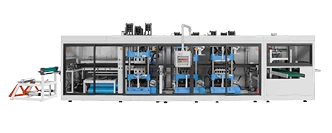
In our daily lives, we often use disposable cups, but have you ever wondered how these cups are actually made? This article will walk you through how a thermoforming machine turns plastic sheets step by step into finished cups.

Plastic Sheet Preparation
The first step in producing thermoformed cups is preparing the plastic sheets. This stage mainly involves two parts:
1. Plastic Sheet Source
Plastic sheets are usually produced through extrusion or calendering.
• Extruded sheets are made by melting plastic pellets and pressing them into uniform sheets, commonly using materials like PET and PP.
• Calendered sheets are made by rolling molten plastic into thin, even sheets, a method often used for PS materials.
Different materials have different properties. For example, PET is highly transparent and suitable for food packaging, PP is heat-resistant and ideal for hot beverage cups, and PS is rigid, making it suitable for disposable cups. Choosing the right material ensures the finished cups are both functional and high-quality.
2. Pre-Processing Before Forming
Before entering the thermoforming machine, the sheets need some basic pre-processing. This includes cutting them to the right size, cleaning the surface, and preheating to the appropriate temperature. These steps help the sheets heat evenly during forming and reduce defects, ensuring each cup comes out perfectly shaped.
Heating and Forming
The prepared plastic sheets are first heated until they become soft and pliable, making them easier to shape.
Once heated, the sheets are fed into the thermoforming machine's molds. The molds can be male, female, or specially designed with auxiliary features to help shape the cup. The machine then uses vacuum forming, pressure forming, or a combination of both to carefully press the soft sheet into the mold, gradually forming the cup's shape.

Cooling and Solidifying
After forming, the plastic sheet is still quite soft, and if removed from the mold immediately, it can easily become deformed. To keep the cup's shape stable, it needs to cool and solidify inside the mold. The thermoforming machine ensures the cup cools evenly, which helps reduce warping or shrinking, keeps the dimensions and shape consistent, and also makes the following trimming and packaging steps smoother.
Trimming and Cutting
Once cooled, excess material around the cup's edges is removed using automated trimming systems. This step ensures a clean, smooth rim and precise dimensions, enhancing both the product's appearance and functionality. Automated trimming also improves efficiency, reducing labor costs and material waste.
Inspection and Packaging
After trimming, each cup goes through a quality inspection. Workers or automated systems check the cup's shape, dimensions, wall thickness, and surface for any defects to ensure every product meets the required standards. Once approved, the cups are packaged, usually using automated packaging systems, which not only improve production efficiency but also ensure safe handling during transportation.
Conclusion
The cup production process involves multiple stages, from plastic sheet preparation and heating to forming, cooling and solidifying, trimming and cutting, and finally inspection and packaging. Each step is crucial. By choosing advanced thermoforming machines, plastic sheets can be efficiently and precisely transformed into finished cups.
As a professional thermoforming machine manufacturer, LITAI offers high-performance, reliable equipment and comprehensive solutions to make your production more efficient. To learn more about our products or request a customized solution, feel free to contact us.


