




Introduction
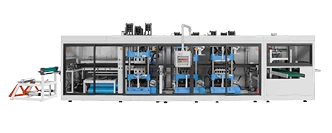
As the food packaging industry continues to evolve, manufacturers are expected to deliver packaging that offers better product protection, attractive presentation, and higher production efficiency. At the same time, packaging materials and product designs are becoming increasingly diverse, placing greater demands on manufacturing equipment. A food packaging thermoforming machine has become an essential solution for producing high-quality food packaging, but selecting the right machine requires more than comparing technical specifications. Matching equipment to your products, materials, and production goals is the key to achieving efficient and cost-effective manufacturing.

Identify Your Food Packaging Requirements
Before comparing machine specifications or production capacity, manufacturers should first evaluate their actual food packaging requirements. Every packaging project has unique production demands, and selecting a thermoforming machine without clearly defining these requirements may result in unnecessary investment or limited production flexibility. By understanding the products you manufacture, the materials you process, and your expected production output, you can narrow down the most suitable equipment and make a more informed purchasing decision.
How to Match Your Food Packaging Thermoforming Machine to Products, Materials, and Output
Choosing the right thermoforming machine starts with understanding your product
requirements, material characteristics, and production objectives.

Packaging Product Requirements
Consider the product specifications that will influence machine selection, including:
Product Size: Ensure the machine supports the dimensions and forming area required for your packaging products.
Forming Depth: Deep-drawn packaging requires equipment capable of maintaining consistent forming quality.
Packaging Design: Products with complex structures or multiple cavities demand higher forming precision and mold stability.

Packaging Material Requirements
Evaluate the material characteristics that affect forming quality and processing performance, including:
Material Type: Identify whether your production primarily uses PP, PS, HIPS, PET, PVC, or PLA, as different materials require different forming conditions.
Material Thickness: The thickness of the sheet affects heating time, forming quality, and the machine's processing capability.
Material Performance: Consider properties such as rigidity, transparency, heat resistance, and sustainability to ensure the selected material meets both packaging and production requirements.

Production Output Goals
Define your production objectives before selecting a machine, including:
roduction Volume: Estimate your expected daily or monthly output to determine the level of production efficiency required.
Production Flexibility: Consider whether your production involves frequent product changes or long, continuous production runs.
Business Growth: Evaluate future capacity expansion plans to ensure the selected equipment can support increasing production demands.
How the Right Thermoforming Machine Improves Food Packaging Production
Matching the right machine to your production requirements helps maximize
manufacturing performance and long-term operational efficiency.
Deliver More Consistent Packaging Results
When machine capabilities match the complexity of your packaging products and materials, manufacturers can achieve more consistent forming quality with fewer dimensional variations, improving the overall appearance and reliability of finished food packaging.
Maintain Stable Production Across Different Applications
A well-matched thermoforming machine adapts more effectively to changing packaging specifications, material types, and production schedules, allowing manufacturers to maintain stable performance across a wider range of packaging applications.
Optimize Manufacturing Resources
Instead of simply increasing production speed, the right machine helps optimize equipment utilization, material consumption, and production planning, enabling manufacturers to achieve greater efficiency with existing production resources.
Support Sustainable Business Development
As packaging requirements continue to evolve, equipment that closely matches current and future production needs provides greater flexibility for introducing new products, expanding capacity, and responding to changing market demands.
Conclusion
Choosing the right food packaging thermoforming machine requires more than comparing machine specifications. By carefully evaluating your packaging products, material requirements, and production goals, you can select equipment that delivers stable production, consistent packaging quality, and long-term manufacturing efficiency. A well-matched thermoforming solution not only supports today's production needs but also provides the flexibility to adapt as your business continues to grow.
Why Choose LITAI as Your Food Packaging Thermoforming Machine Manufacturer?
Choosing the right thermoforming machine is only part of the investment-the expertise of your manufacturing partner is just as important. With more than 30 years of experience in thermoforming technology, LITAI has become a trusted supplier of advanced thermoforming solutions for the global food packaging industry. The company offers a comprehensive range of 3-station, 4-station, and customized thermoforming machines designed to process materials such as PP, PS, HIPS, PET, PVC, and PLA, meeting diverse production requirements. Backed by strong engineering capabilities, strict quality control, and professional technical support, LITAI helps manufacturers improve production efficiency, maintain consistent product quality, and build reliable, future-ready packaging production lines. Contact us today to discuss your food packaging applications and discover the thermoforming solution that best fits your production needs.


